Flowers, Chocolates, and Promises
According to Beauty and the Beast, that’s what you give someone you love (though, Cogsworth is a bit more cynical).
Every grocery store floods with enormous bouquets of roses every February. Red roses, pink roses, cream roses, and every color in between. It’s as if the world says “it’s not real love if it’s not a rose.” And, the price tags make sure to hammer home the same point.
Now, we’re not rose haters in this house. They’ve more than earned their reputation as queen of the garden and a stunner in every bouquet. But, if you’re going to invest that much money into an arrangement of flowers that will wither and wilt within weeks, you might as well make a better investment.
If Valentine’s Day is about celebrating love, a temporary emblem is befitting of a new and perhaps uncertain relationship. Bouquets are phenomenal additions to the first dates, a cherry on top for the first few anniversaries, or a pick-me-up on a rough day. For that deep love – the really good stuff – a bouquet simply won’t do.
The true romantics know that love everlasting is sown and grown with tender patience and steady care. You don’t want a half-dead bouquet rotting in a vase. You want something with roots. Something that erupts in blooms to proudly declare your affections to your beloved year after year after honeymooned year. Something that says “You are The One for me.”
For all the true romantics out there, it’s time to step up your trial Valentine’s Day bouquet into a fully committed, year round celebration of your romance. You might even call it your Happily Ever After bouquet. Enter: The Tree.
But Which Tree?
So glad you asked.
Our in-house plant experts (and local lovebirds) came up with a list of flowers to complement your gorgeous love story. Let’s plant your happily ever after!
For the Love They Write Books About: The Fairy Magnolia
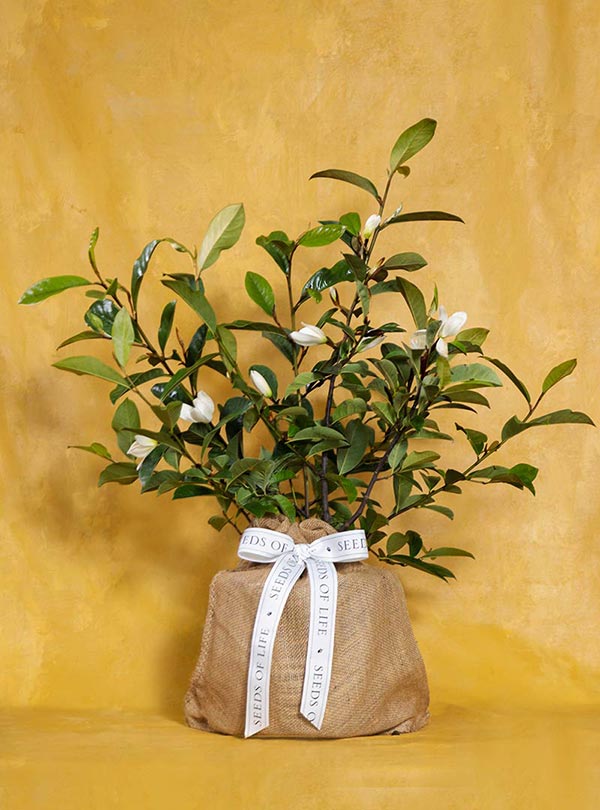
If your partner is royalty in your eyes, the Fairy Magnolia is the tree for you. While still part of the magnolia tree family, this particular species grows more like a hedge – about 10-15 feet tall at most. It’s drought tolerant, easy to care for, and its leaves are evergreen like that of most magnolias. When you plant a few of these next to each other, you can expect them to grow quickly to fill the space with dense foliage.
But every castle has deep green hedges. Where’s the whimsy?
The Fairy Magnolia gets its namesake from the blooms that dot its branches in the early spring. Ranging from cream to blushes of pale pink, this tree looks like it was designed by Disney for Snow White’s cottage. We’re talking dozens upon dozens of blooms, year after year, that drape your home in the sweetest fragrance. Sleeping Beauty would wear that scent as a perfume if she could.
Careful… if you gift the Fairy Magnolia to your beloved, you might find yourself waltzing in your garden in the golden hours of springtime sunset with your beloved singing “I know you, I walked with you once upon a dream!”
For Love that Always Burns Bright: The Camellia
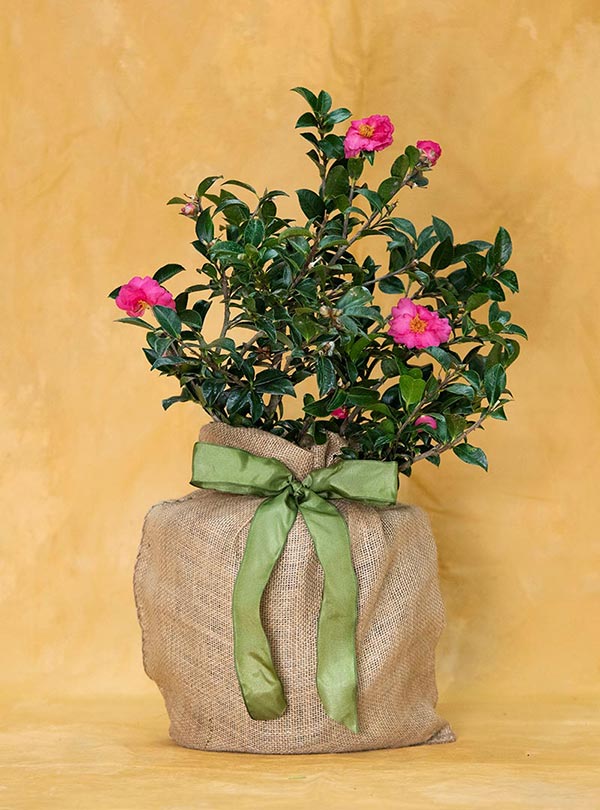
Some loves come easy like fairytales, while other rare and beautiful forms bloom in times of adversity. If your love has lasted against the odds (life has a peculiar way of throwing us curveballs), commemorate your story and celebrate your incredible years to come with the Camellia.
White, pink, or bright crimson, the Camellia bush is a magnificent bush famous for blooming in the dead of winter. While everything else is dead and barren, the Camellia puts out palm-sized blooms against deep glossy green leaves. Technically, this plant is a shrub, but left unpruned, these bushes will tower over you and your beloved. If you pick the red or pink varieties, it’s got a certain bonfire quality to its look that loudly declares “our love is ablaze.”
People adore these bushes for the homage their blooms pay to that of the rose bush. Camellia blooms are round bunches of densely packed petals… but they’re far less work to maintain than most rose bushes. Well-draining acidic soil, a partially shady spot, and regular watering are all you need to keep this bush sparking up its flowering embers.
For the Love Who Gives You Hope: The Magnolia Ann and the Magnolia Jane
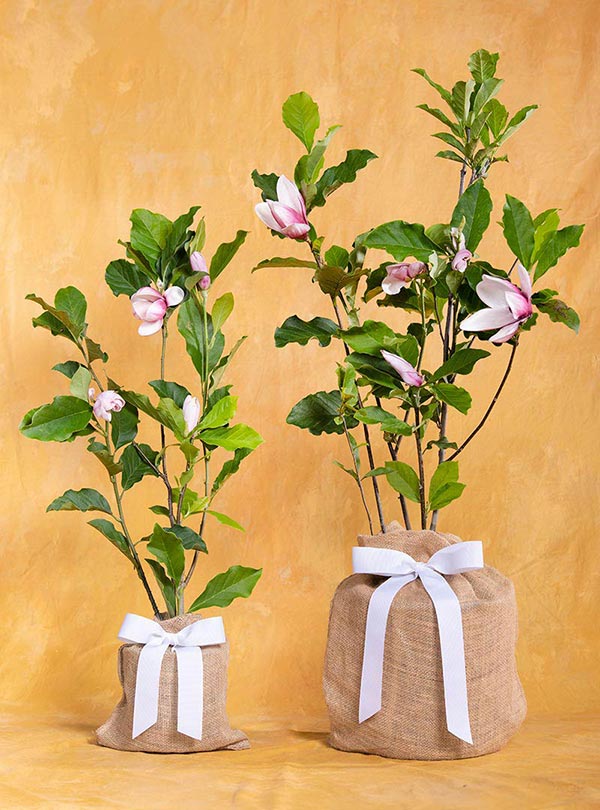
Some of us are lucky enough to find the person who makes the world shine a little brighter. Every cup of coffee on a Sunday morning tastes a little richer. The birds twittering is a little sweeter. The laughter living in your belly just comes easier. For your beloved, give the gift of a Magnolia Ann or Jane.
Much like its cousin, the Fairy Magnolia, the Magnolia Ann is a small species of magnolia that can be classified as a large shrub or a small tree (8-12 feet) that’s drought tolerant and easy to care for. Its big sister, the Magnolia Jane, is incredibly similar, but you’ll find it grows a little faster and bigger than its sibling (20-25 feet).
What sets these sister trees apart from the rest of the magnolia family is their deciduous habit: these trees drop their leaves annually. While raking leaves might not be your favorite pastime, these species of magnolia rewards your toil with an eruption of purple-hued blooms in spring. No leaves, just flowers upon flowers, all over the boughs. A particularly happy tree may even flush flowers for a second time again in the summer!
Of all of the magnolia species, the Magnolia Anns and Janes are among the heaviest flowerers out there – lending to their popularity. Despite barren branches, these tree brighten even the dullest of days with their violet blossoms (much like your beloved).
So… Ready to Choose Your Forever Bouquet?
Your happily ever after is rooting for you!